

How To Set Up At&t Wifi Calling
A Wi-Fi extender is a gadget that sucks in Wi-Fi signal, and then spits information technology back out on the same network proper noun and frequency. Recollect of it as a radio repeater, because that'southward essentially what it is.
It's a relatively like shooting fish in a barrel and inexpensive way to extend your network into those hard-to-reach spots in your home, and much less expensive than a total mesh system. Simply setting information technology up isn't e'er straightforward. Here are some basic tips on how to get started, and how to make the almost of these handy devices.
Buying the right Wi-Fi extender
When buying a Wi-Fi extender, yous want to brand the most out of the connexion you already take. So check your current Wi-Fi router — either the one that y'all got from your ISP, or the one you bought yourself and connected to the modem.
You're going to want to friction match two values betwixt the router you lot accept and the extender you want to buy: the Wi-Fi generation, and the Wi-Fi speed. The generation volition generally be either Wi-Fi 5 (802.11ac) or Wi-Fi half dozen (802.11ax). The speed is expressed as a function of that connection: if the extender is marked as "AC750," that means it's using 802.11ac at up to 750 megabits per second. If it says "AX1800," information technology's using 802.11ax at up to 1800 megabits (one.viii gigabits).
You can purchase an extender that's newer and/or faster than your router, and it will piece of work fine. Only y'all'll be paying for something that you don't really demand, since the extender won't exist able to speed up the connection from the router itself.
Where to put your Wi-Fi extender
Choosing where to identify your network extender is essential. Ideally yous want information technology close enough to your Wi-Fi router at the source to get the most stable connection, just far enough away that it will comprehend a large area that the router doesn't cover.
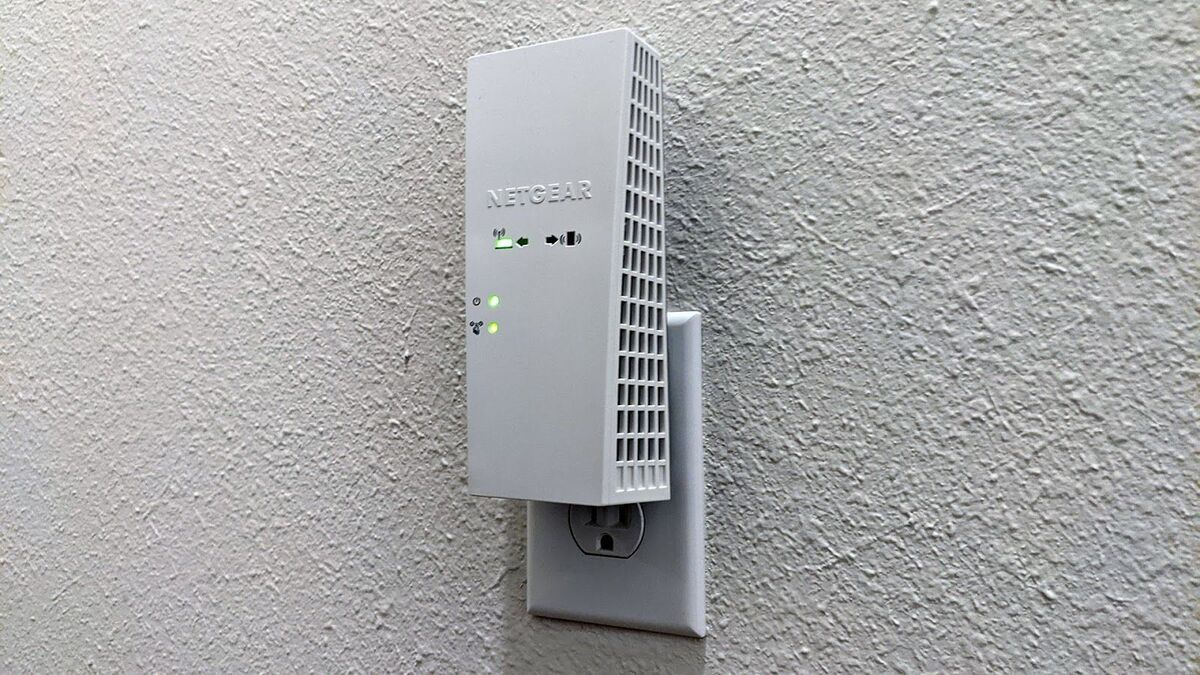
For example: if you live in a two-story house and your router is on the main floor in the living room, an ideal spot for the extender is plugged into an outlet at the top of the stairs. This will give it a fairly reliable, line-of-sight connection to the router, while rebroadcasting its wireless betoken to the rooms on the second floor.
 Michael Crider/IDG
 This outlet is in the middle of my halfway, between the router in the living room and the bedrooms.
If you're using a Wi-Fi extender for just i user (say, to get a better indicate for a dwelling office PC), you'll want to place it approximately between that user and the Wi-Fi router. If you want to connect to the extender over Ethernet (see the Connection section), you might have to fudge it and go farther.
Remember that in one case you've ready your Wi-Fi extender, you can move information technology around your home as needed. Feel complimentary to experiment with placement to get the best, most reliable signal.
How to set up a Wi-Fi extender
Every brand of network hardware is a fiddling different, and we can't cover them all. Generally if you follow the instructions that came with your extender, y'all should be okay. That being said, there are usually two unlike ways to get almost it:
Setup with a PC
This is the more technical way to ready up your extender. Before we begin, write down the SSID (proper name) and password for your existing Wi-Fi network, if you don't have them memorized. Do the same for the 2.4GHz and 5GHz networks, if they're unlike.
You'll need a desktop or laptop with an Ethernet cable for a wired connection, and the cable itself. (One probably came in the box with your extender.) If your computer doesn't accept an Ethernet port, you'll need to connect to the default Wi-Fi network that the extender broadcasts, which is dissimilar from the ane already in your domicile (at least for at present.) This is usually "WIFI_EXTENDER" or something similar; check the instructions if it asks for a password.
 Michael Crider/IDG
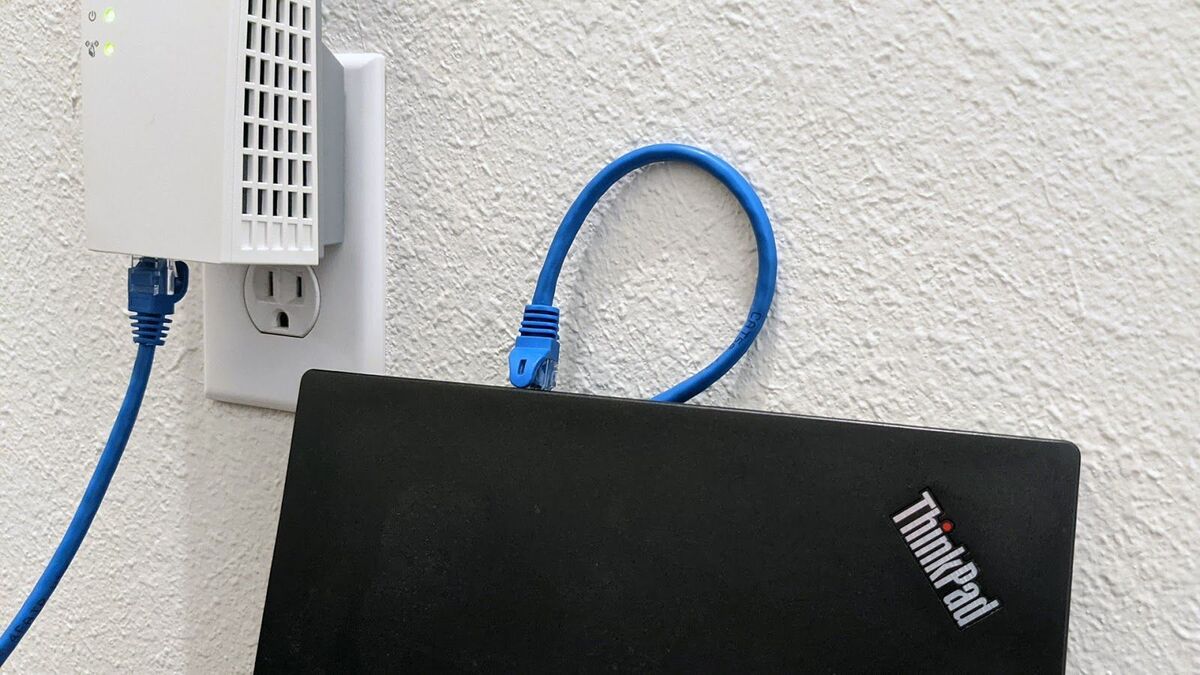
 Connecting a laptop to the Wi-Fi extender.
Plug the extender into the wall, then plug the Ethernet cable into both the extender and your computer. Alternately, disconnect from your home Wi-Fi network and connect directly to the extender. Note that in both cases you'll temporarily lose web connection. If in that location's a switch on the side of your extender, make sure information technology'southward set to "Extender" way, not "AP" or "Admission Point." (AP is for connecting direct to your modem, which you don't demand if you take a Wi-Fi router already, or an all-in-one modem/router.) It may need a few minutes to boot upwardly.
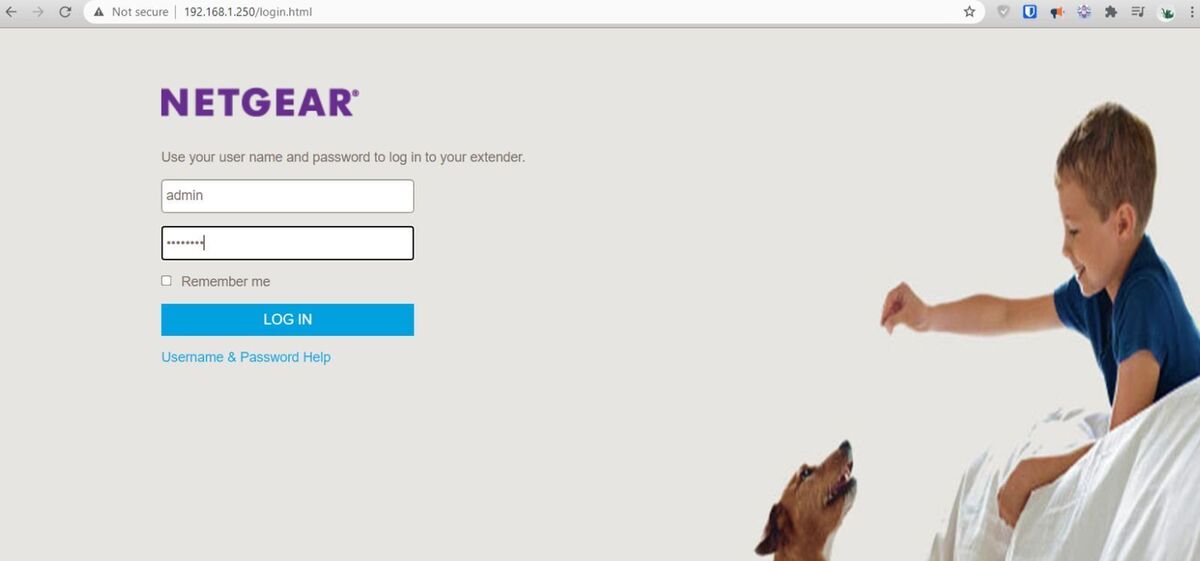
On your computer, open a web browser like Edge or Chrome. Y'all're going to apply the browser to enter the extender's web-based interface. The address for this interface is normally a simple numerical address on the local network, either 192.168.0.i or 192.168.i.one. Try entering both of those in the URL bar; a login prompt should announced.
If neither of those addresses piece of work, check the instructions that came with your extender or the sticker printed on its side; some brands use something a little different. My Netgear extender uses "www.mywifiext.net," some Asus models use "repeater.asus.com," et cetera. If you tin can't find it, Google your repeater brand on your phone and add "login," and you'll probably find it soon enough.
 Michael Crider/IDG
 In one case you get to this folio, you'll demand to log in with the default username and countersign. These are ordinarily "admin" and "countersign," respectively. Don't worry, you lot can alter them later in the extender settings bill of fare. If the default name and countersign don't work, try a factory reset of the device, which normally needs a push pressed with a pin or paperclip.
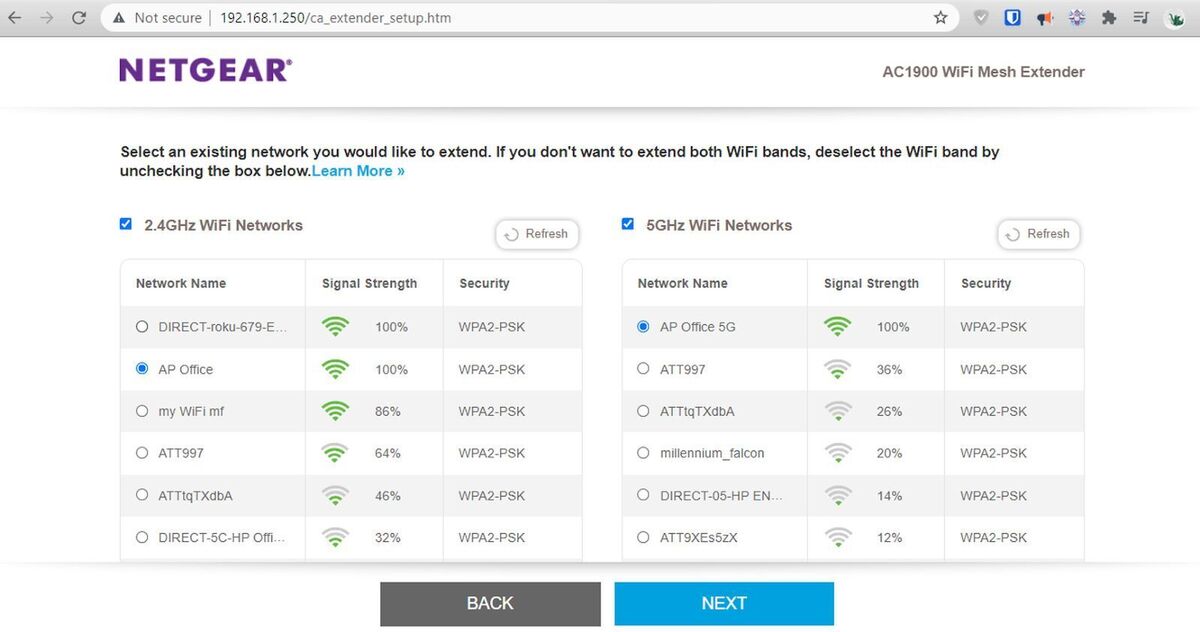
Once you're logged into the repeater interface, it should start a wizard to guide you through connecting to your local network step-by-step. But if it doesn't (for example, if you bought your extender used), hither's what you lot do:
 Michael Crider/IDG
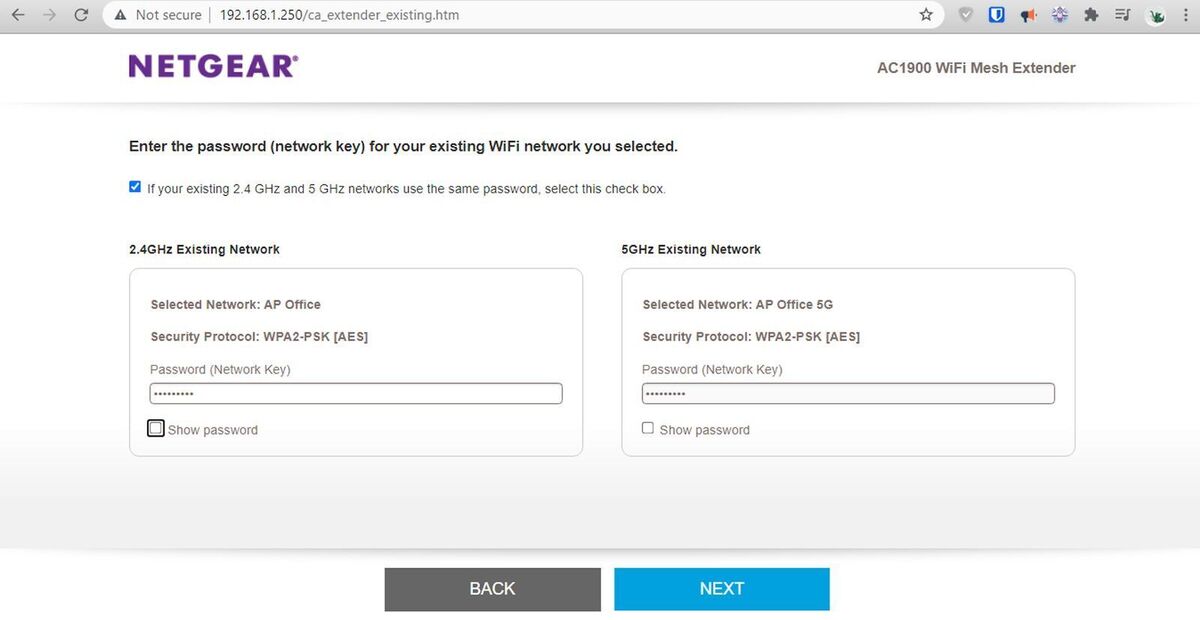
 Discover the Wi-Fi settings page for your extender, and enter the same name for the SSID and password as you employ with your Wi-Fi router. What'south happening is that the extender is logging into your network via the router, just like yous do with your laptop or telephone. Once it's logged in and the connexion is stable, it will rebroadcast the same data connectedness on the same SSID throughout your home, allowing for easy connections via other devices.
 Michael Crider/IDG
 Most modern extenders volition accept settings for both a two.4GHz network and a 5GHz network. Once again, merely make sure that the SSID and passwords match the settings on your existing router.
Double-bank check that you accept everything set correctly, and then click "salve" or "apply," and you're ready to go. This may accept a few minutes.
Setup with a phone or tablet
If yous tin connect to the extender's Wi-Fi network with its default SSID and password, you tin can follow the aforementioned steps as to a higher place with your phone's browser.
If you can't, so download the advisable helper app from the iOS App Store or the Google Play Store on Android. For my extender, this is Netgear Nighthawk. Your extender's box will probably accept a link or QR code with the corresponding app.
From hither, y'all should take fairly straightforward instructions on how to gear up up your extender. Remember, all you actually need to do is make certain information technology's using the same Wi-Fi network as your existing router. Go through the steps on the app, which will be pretty like to the ones for PC setup above, and save your settings. You're prepare to go.
Connection
One time y'all've completed the setup steps to a higher place, your extender is all set. Place it somewhere ideal in your dwelling for coverage, and Wi-Fi devices like phones, laptops, and tablets will connect to it automatically. Y'all should see green indicator lights for both power and wireless connexion; if the connexion light is orange or red, the device needs to be physically closer to the Wi-Fi router.
If you like, yous tin use the extender with a different SSID and/or password, but there's no existent do good unless you want to connect specifically to the extender or the router and non the other device.
If you're using your extender for a wired device, like a desktop PC or a game console, plug the Ethernet cable into the extender and and so the device itself.
That'southward it, you're ready to rock!

How To Set Up At&t Wifi Calling,
Source: https://www.pcworld.com/article/394819/how-to-set-up-a-wi-fi-extender.html
Posted by: wanniong1966.blogspot.com
0 Response to "How To Set Up At&t Wifi Calling"
Post a Comment